

 English
 Pусский
 한국어
한국어 العربية
 ไทย
ไทย हिन्दी
 Indonesia
 Tiếng Việt
 বাংলা
বাংলা


マグネシウム結晶
Magnesium Crystals: Structure, Properties, and Applications Magnesium crystals are a fascinating subject in materials science due to their unique structural and physical properties. Magnesium (Mg) is a lightweight, silvery-white alkaline earth metal that crystallizes in a hexagonal close-packed (HCP) structure under standard conditions. This arrangement contributes to its notable mechanical and chemical characteristics, making it valuable in various industrial and scientific applications. Crystal Structure The HCP lattice of magnesium consists of layers of atoms arranged in a repeating ABAB pattern, where each atom is surrounded by 12 nearest neighbors—6 in the same layer and 3 each in the layers above and below. This dense packing results in a high strength-to-weight ratio, though it also introduces anisotropic properties, meaning mechanical behavior varies with crystal orientation. The lattice parameters of magnesium are approximately a = 0.320 nm and c = 0.520 nm, with a c/a ratio close to the ideal HCP value of 1.633. Mechanical and Thermal Properties Magnesium crystals exhibit excellent ductility and malleability, especially at elevated temperatures, but their HCP structure limits slip systems at room temperature, leading to lower formability compared to cubic metals like aluminum. However, alloying with elements such as aluminum, zinc, or rare earth metals can enhance plasticity. Thermally, magnesium has a melting point of 650°C (1202°F) and a relatively low density (1.74 g/cm³), making it one of the lightest structural metals. Its thermal conductivity (~156 W/m·K) and electrical conductivity are moderate, suitable for heat dissipation in electronics. Chemical Reactivity Magnesium is highly reactive, particularly with oxygen and water, forming a protective oxide layer (MgO) that slows further corrosion. This reactivity also makes it useful in pyrotechnics and as a sacrificial anode in corrosion protection. Applications 1. Aerospace & Automotive: Magnesium’s lightness and strength are ideal for reducing weight in aircraft and vehicle components. 2. Biomedical: Biodegradable magnesium alloys are explored for implants due to their biocompatibility. 3. Energy Storage: Magnesium-ion batteries are emerging as a potential alternative to lithium-ion systems. 4. Industrial: Used in alloys, desulfurization of steel, and as a reducing agent in metallurgy. Challenges Despite its advantages, magnesium’s flammability in powder or thin forms and susceptibility to corrosion in humid environments require careful handling and protective coatings. Conclusion Magnesium crystals combine lightweight properties with functional versatility, driving innovation in multiple fields. Ongoing research focuses on improving corrosion resistance and mechanical performance through advanced alloy design and surface treatments, ensuring broader future applications. (Word count: 500)
製品
カテゴリー:
-
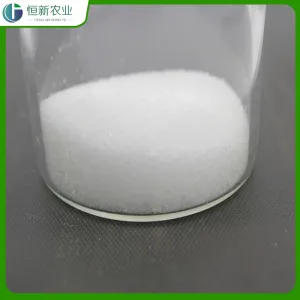
硫酸マグネシウム七水和物結晶
彼らの分類: 硫酸マグネシウム七水和物ビュー: 7番号:解放時間: 2025-12-09 14:20:35硫酸マグネシウム七水和物結晶は、化学式MgSO4・7H2Oで表される硫酸マグネシウムの水和物の結晶です。 基本情報 別名:硫酸硫黄、苦塩、エスペリジン塩など。 分子量:246.48。 密度:1.68g/mL(25℃)。 pH値:7、中性。
ニュース
カテゴリー:
検索結果はありません!
ケース
カテゴリー:
検索結果はありません!
ビデオ
カテゴリー:
検索結果はありません!
ダウンロード
カテゴリー:
検索結果はありません!
採用
カテゴリー:
検索結果はありません!
おすすめ商品
検索結果はありません!



 電話
電話